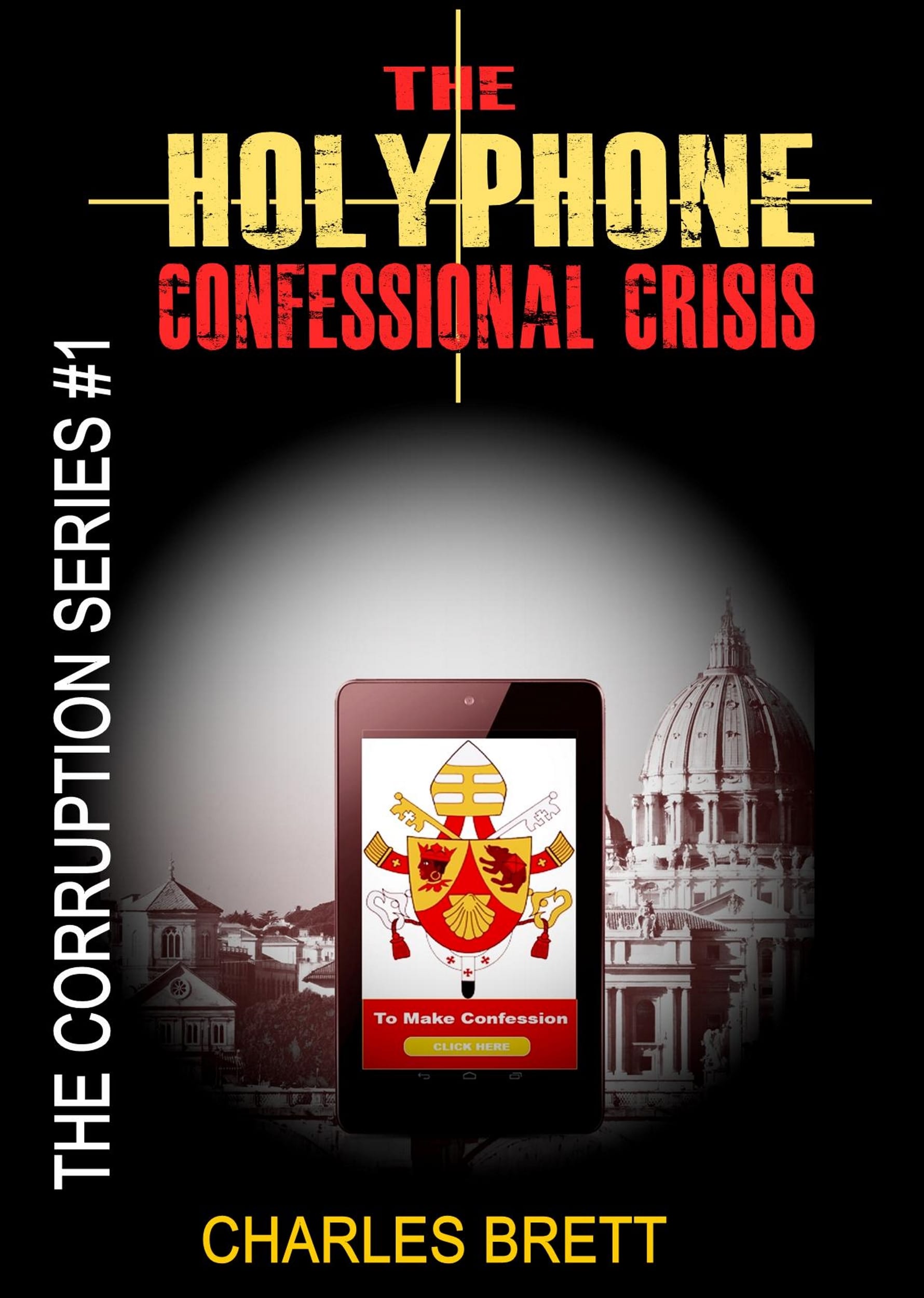
The HolyPhone Confessional Crisis
When the Vatican puts confession on a smartphone, it calls this the HolyPhone — a miracle of modern faith. An unlikely alliance sees an opportunity. A Spanish Opus Dei loyalist, an American with more appetites than her father's fundamentalist congregation can forgive, an Israeli tech genius and an ex-banker turned priest combine to cream off a slice of the Church's sacred revenues.
Cardinal da Ferraz built the HolyPhone to save his Church's finances. Now he suspects it's being turned against the very institution that relies on it. He summons Davide, the system's original architect, an Irish policeman with his Australian computer-crime partner to find the truth — before confession becomes the very leak the Church cannot afford.
Four people. One heist. A Church with no idea how much it's already lost. Is it too late to recover its secrets?
If you enjoyed any of the following, you should like "The HolyPhone Confessional Crisis" where technology (from smartphones to the Vatican Confessional Call Center) intersects with an age-old religious institution, criminality and outright institutional panic:
- Digital Fortress by Dan Brown
- Why: Focuses heavily on cryptography, digital surveillance, and the complete vulnerability of massive, secretive institutions when their communications are intercepted.
- Daemon by Daniel Suarez
- Why: A high-concept techno-thriller where an automated software system begins rewriting societal rules from behind the scenes, mirroring how the automated "HolyPhone" initiative disrupts traditional structures.
- The Blue Nowhere by Jeffery Deaver
- Why: A gripping cat-and-mouse game centered around data manipulation, system breaches, and the grey-hat hackers trying to trace digital footprints.
- The Name of the Rose by Umberto Eco
- Why: Though historical, it is the ultimate blueprint for a "religious communication crisis," where an institution attempts to violently suppress a secret method of tracking forbidden information.
- Zero Day by Mark Russinovich
- Why: Written by a real-world cybersecurity expert, this novel deals with the infrastructure vulnerabilities that occur when vital systems are digitized and exposed to bad actors.
Join The Corruption Series Insider List
Get notified the moment upcoming thrillers hit the shelf.